Showing posts with label Montessori curriculum. Show all posts

Thursday, 11 August 2022

Five key areas of the Montessori curriculum

A healthy Montessori environment is an important part of your child's development. Five key areas contribute to a great Montessori curriculum. Each area of study contributes a great deal to your child’s learning. They will be able to grow by stimulating development through logical and creative experience.


Practical Life


Practical life exercises include

  • Food preparation
  • Hand washing
  • Dressing
  • Grooming
  • Refining movements


Sensorial


Sensorial exercises allow

  • Sight (visual)
  • Smell (olfactory)
  • Touch (tactile)
  • Sound (auditory)
  • Taste (gustatory)


Language


The goal of Montessori language activities is to improve your child's listening, understanding, and vocabulary. Scientific evidence supports the Montessori view that infants are born with all they need to acquire language and that they absorb it easily.


Mathematics


This area of study helps your child to bring order into the life, math exercises use hands-on materials like:

  • Number rods
  • Number boards
  • Number tiles
  • Sandpaper numbers
  • Spindle box


Cultural


Montessori cultural exercises are designed to help your kid understand their position in the world while also learning to appreciate and accept diversity. Cultural exercises include a wide range of themes, including:

  • Geography
  • Science
  • Zoology
  • Botany
  • History


There are various advantages that your child gains with this kind of Montessori curriculum.

  • Independence
  • The ability to develop their skills and talents
  • A love for learning through individualized, and hands-on activities
  • Develop self-discipline
  • Improve social interaction

Connect with MKU Training Institute by visiting https://mkutraining.com or dialing 561-801-0822 for detailed information on learning to handle a great Montessori curriculum.

Saturday, 12 June 2021

Creating a Prepared Environment for Montessori

 The viewpoint we take as educators is one of the main differences between conventional methods and the Montessori process (whether we are parents, teachers, family members or the myriad of other roles in which adults act as educators to children). The demand for Montessori training online is rising as more and more millennial parents are looking for imparting wholesome education to their children; and the Montessori pedagogy reflects on a comprehensive approach during the developmental years of the kids.


Trying to guide or regulate the process of human development occurs naturally and predictably through the interaction between the infant and the environment; as a result, attempting to do so is at best futile and at worst actively harmful. the importance of studying a child's natural potentials and allowing them to guide their own experiences This does not, however, imply that teachers and parents are inactive and would just sit around to make the kids learn everything on their own.

If development takes place at the point where a child and their environment collide, and the child is perfectly suited on their side, the environment remains the other half of the equation. As educators, the main job is to develop, curate, and sustain an atmosphere in which the child can find all they need, and then to relate the child to that environment. Reputed online Montessori training institute provides a complete idea on the Montessori curriculum and how it helps aids children to grow at their own pace.


Key Aspects of the Prepared Environment


A prepared environment encourages the child to participate in it in a constructive and beneficial way while allowing the adult to observe without intervening. It must therefore be healthy for the child first and foremost, so that they can engage with it individually without an adult jumping in to “rescue” them from possible damage.

It must, of course, provide opportunities for activity and work that are suitable to the child's level: demanding but doable, in order to keep the child's attention and develop them. It must also be pleasing to the child – appealing, even stunning. Finally, it should always have both order and peace, which is what the child needs at all stages of development.

The educator, according to Dr. Montessori, serves as a link between the child and the world, facilitating initial interaction by drawing the child's attention and interest to the environment's interactions and opportunities.

Since the goal of childhood is to adapt – to become the adult of one's time and place – every child is born with an insatiable desire to learn, understand, and imitate the adult. It is the adult's responsibility to translate this enthusiasm for the world to the setting as a role model for how to deal with it.


Setting up the Environment


The method of designing a child's environment is a delicate balance of functional and aesthetic considerations, none of which should be prioritized over the other. When designing an environment, we start with the architectural and physical aspects, such as light and air quality, protection, and hygiene. Of course, this is not special to Montessori, but there isn't anything to say about it. However, we pay more attention than others to aesthetic elements like color and texture, as well as the dimensions of the space: the size and construction of the furniture, the arrangement of objects, and so on, to ensure that the child can move around and do things comfortably.

When designing an atmosphere, one of the most important things we can do is get down to the height of the child for whom the environment is designed and look at it from their viewpoint: can they see the displays without craning their head?

On many levels, order is a truly necessary component of any child's world. We must provide order in their environments to help children build order in their minds: a graded, systemic, and organised arrangement of every aspect of their world. Order provides a sense of security and familiarity to the child by providing points of reference and known sequences. Rather than being frustrated and confused, a child who is comfortable in the order of the world will explore, enjoy greater independence, and have the ability to choose from what is available.

The environment's activities, materials, and equipment should support rather than guide the child's growth. This means that any developmental resources, toys, or activities we have should not be placed on the infant, but should instead appeal to them and entice them with their beauty and functionality.

Finally, the environment's care, order, and harmony reflect the relationship between the adults and children who share the room. It's important to consider what we're expressing to the child by the way we use our power to preserve and alter the space as we exercise it.

Monday, 31 May 2021

Pros and Cons of Homeschooling

It is not a new concept to choose to homeschool your children. However, as we begin the 2020–2021 school year, months into the global COVID-19 pandemic, the term "school choice" is taking on a whole new meaning, as an increasing number of parents see homeschooling as a viable option for their children.

Many school districts across the country are proposing a number of education options to combat the spread of the virus, ranging from in-person school wearing masks to complete online school to a delayed start to the academic year. With so many learning options available—many of which aren't ideal—some parents are asking if they should take control of their children's education. In fact, the millennial parents are taking up Montessori curriculum to help their kids guide better.

If you're considering teaching your child at home for the first time or have always considered it for your family, you're probably aware that there are numerous benefits and drawbacks.

Every educational system provides excellent opportunity for pupils to acquire new knowledge and abilities while also allowing them to develop their own distinct characteristics and interests. There are advantages and disadvantages to homeschooling, just as there are to public, private, charter, unschooling, and other educational approaches.


A MAJOR LIFESTYLE CHANGE


As you are probably aware, when you choose to homeschool, you will assume the roles of both teacher and administration. You'll have to plan lessons, organise field excursions, coordinate activities with other parents, and stay on top of state and local homeschooling regulations. These tasks are added to your regular parental duties.

There are also the additional financial costs of homeschooling. While there are many free resources, textbooks, books, paper, art supplies, computers, software, and other homeschool equipment all cost money. When you are taking up the course on homeschool Montessori training, you will get a better idea on the tools and materials that are mandatory for learning.

Another significant difference is that, while most parents spend a significant amount of time with their children, homeschooling parents spend a lot more time with their children. The length of time it takes to homeschool is a significant lifestyle change that many parents consider when deciding whether or not to homeschool their children. Though there are numerous options for parents to find time for themselves, it's crucial to remember that you'll be spending more time with your kids than you are now.

Pros


  • Freedom

One clear advantage of homeschooling is the capacity to make your own decisions, whether you call it consciousness, independence, or control. You'll be able to travel or move around freely as a homeschooler, include religious instruction into daily learning, and avoid social pressures or harassment that your child may face at school. Plus, every discipline, from sailing to sewing to science, is fair game in a home-based education. Homeschooling encompasses a wide range of activities, including practical skills, volunteer work, creative hobbies, and traditional trades. According to some homeschoolers, teachable opportunities occur all the time, and "school" isn't restricted to school hours.

  • Individualized Education

Every child is unique. Unfortunately, teachers cannot always customise lessons to your child's specific needs in a bigger group setting such as a conventional school. In contrast, you may meet your child precisely where they are at home, tailoring classes to their own interests. If you have more than one child, homeschooling allows you to alter your approach in terms of learning styles and grade levels. Plus, because you're right there with them, you can celebrate any triumph or achievement with them in real time.

  • Minimal COVID-19 Restrictions

For many parents, the decision to homeschool their children for the 2020–2021 school year is motivated by the desire to circumvent COVID-19 constraints imposed at school. Wearing a mask all day and maintaining social distance from pals is a difficult task for a 6-year-old. Educating at home, obviously, means not having to deal with the pandemic's masks, physical barriers, and other difficult "extras."

  • Strong Parental Relationships

The longer you keep with your children, the more chances you have to bond with them. If you and your family have always desired for more hours in the day, homeschooling could be the answer. Positive experiences such as exciting field trips, learning a-ha moments, and “recess” at the park can all help to strengthen parent-child and sibling relationships. If work schedules normally limit time together on weekends or holidays, homeschooling's flexible hours may allow for more leisure with both parents.

Cons


  • A Lot of Work

You're suddenly a teacher, tutor, curriculum researcher, and principal, in addition to your home responsibilities as a mom or dad. If you have younger children at home who aren't yet in school, you may find it difficult to keep them occupied while you teach bigger children.

Plus, as enjoyable as tailoring schooling to each child's learning style might be, it can add to your workload.

  • Less Time for Yourself

Homeschooling's workload—and having your children at home all day—is bound to leave you with less leisure for yourself. Some homeschooling parents claim that they don't have time to exercise, let alone shower and take care of themselves.

  • Not Taking Advantage of Certain Opportunities

Despite its vast flexibility, homeschooling can limit your child's chances in several ways. A homeschool program, for example, may not be able to give the same variety of electives as a major public school for high school students. The same is true when it comes to social possibilities. It is your responsibility as a homeschooler to provide social connection that your child will not receive via school dances, assemblies, or regular classroom pair work.

Wednesday, 31 March 2021

Six Ways to Make Your Kid Get More Involved in Summer Vacation

One of the greatest ways to break out from the regular life is to go for a vacation. This will be about experiencing a new place or embracing new adventures with lifetime of memories. However, for kids, it can be difficult to break from their routine and adjust to a new one, even if it is for a few days or a week. To help them learn the balance, you can take them to regular vacations that can start with small trips.

In the new environment, your kid has to find a sense of normalcy and the trained mentors of Montessori curriculum knows how to make it so for the kids. You can start by this summer vacation and here are some Montessori-inspired strategies that you can follow for better outcome -


Include the kids into the planning


Regardless of the extent the kid is capable to helping, you can involve him/her into the planning. May be you can ask your one year o bring the diapers from the basket and place it in the bags, or ask your 4 year one to select a book that he wants to read while on the journey. This helps to create a sense of responsibility for the child and also make him truly feel he is important for the family and also in the trip. Make him know that his choices are also into the itinerary and that his ideas are special in every way.

Share the details


Do not go by the age and make sure to share the big picture of the vacation. It can go to the extent how you are planning to pre book a cab to go to the airport and till the end of the journey where he has to come back and join classes. It might initially be boring for the kid but to give them a fair idea about the trip will leave them with clear understanding of what is going to happen. In fact, this can also help to reduce the anxiety if they have any.


More independent thoughts


In the homeschool Montessori training, there is very much stress on the idea of enouraging students to think and behave independently. This can include tasks such as letting them dress themselves and getting ready on time or putting their toys back to where they belong before leaving the house. Traveling often leads to situations where parents get doing everything for the kids. Contrary to what you think, there will be better experience for the kids when they are left to do what they want to do and also feel freer to enjoy the trip on their own.

Make space for free time


Neither you nor the rest of the family members will enjoy if your child is overstimulated or overtired. So, plan for the activities accordingly.

Get outside every day


If you have not been able to make any plan for the vacation for this summer, you can still make ways where you can go out to the nature and let your kid enjoy sometime in the lap of the nature. It helps to add rich sensory experiences which can help to enhance the academic results as well.

Follow the child and not your schedule


Try to create a loose itinerary that can fit in the interests of the kid rather than the emder people. Take a few minutes to observe your child and understand what will make them interested in the entire plan.

Monday, 2 November 2020

Five Main Areas of Focus in Montessori Curriculum

 The Montessori method of education was developed by Dr Maria Montessori (1870 – 1952). She created this very different form of education system based on scientific observations about how children learn as they grow to adulthood from birth. The research into child development and its subsequent results led Montessori to create an optimal learning environment which formed the base of Montessori curriculum.


There are many child centered learning schools these days which follow this particular method which incorporates a holistic learning experience. In the Montessori curriculum, there are five major learning areas which includes –

  • Practical life
  • Sensorial
  • Mathematics
  • Language, and
  • Culture


Apart from these five sectors, Montessori schools also cover some other subjects such as health and well being, geography, science and art and crafts. This entire education program is tailored with unique developmental needs and interest keeping in mind the scope of each individual kid. For those who have been professional Montessori educators, they are aware of the five broad aspects of this education system. Let's have a look to find out what these major five education areas constitute –

Practical life


This is about the activities that can help the children learn how to care for themselves and also their surrounding environment that it is designed such it helps the child to become more independent and improve self confidence. It also allows them to understand, perceive and act accordingly to newer challenges. The practical life exercises include courtesy, grace, manners, self care and care for the environment. The sole purpose of these activities is to make them understand about the importance of co-dependents and coordination. It also indirectly prepares the children for the subsequent reading and writing lessons. In some Montessori schools the activities often include food preparation, cleaning, polishing, or watering the plants.

Sensorial


It was also designed by doctor Maria Montessori and helps to rightly express and clarify their sensory experiences. The purpose is to help in the development of intellectual sense of every individual which also has the ability to compare with precision and observe their surroundings. In this lesson, Montessori educators use sensorial materials that can highlight on tactile impression, visual perception, auditory sense, taste and olfactory perceptions. The most common activities include grading and matching materials which can isolate the sense of sound, sight, taste, touch and smell.

Mathematics


A vital lesson for every individual, it is introduced to the children in Montessori with the help of concrete sensorial materials. There are initial exploration with sensorial materials that can help children to understand the basic concept of addition, subtraction, multiplication or division. The activities vary for different age groups. For instance, the toddlers are give in colorful blocks that help them develop number recognition, sequencing of numbers and counting. The sensorial work in mathematics help to prepare the child for more formal approach to mathematics and introducing the abstract mathematical concepts such as decimal system also gets easier.

Language


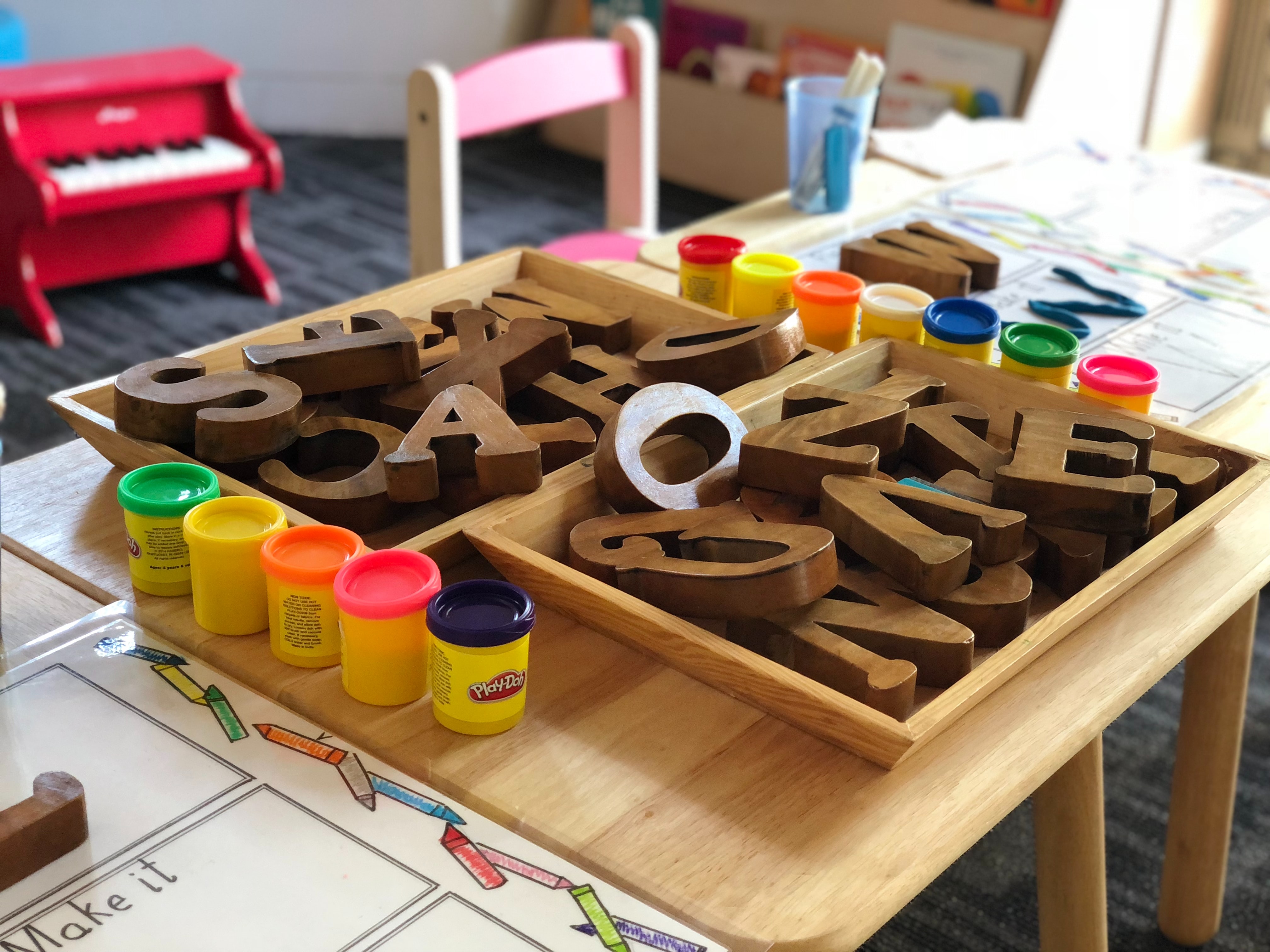
It is designed such that it can enhance the vocabulary both for spoken and written language. There are plenty of language based activities shared by the professional Montessori educators that help these kids to communicate their unique feelings and thoughts. Language based activities such as using movable alphabets, sandpaper letters, learning phonetic sounds are some of the most helpful outcomes.

Culture


It is very important to understand the root where you belong. Cultural activities of children includes exposing them to stories, music, dances or different other artworks. This has to have a connection with the child's community, society and also his or her cultural background. Interestingly, all subjects like geography, botany, science, Zoology are all included in the cultural aspect of Montessori curriculum. For instance, there can be a puzzle of the world map which the kids need to fix. In the long run this also help to develop the capacity for fine motor skills and also express themselves freely.

If you have interest in building your career in Montessori teaching, MKUTI is one of the finest names that offer affordable and convenient Montessori Training. To find out more about the curriculum and teaching visit https://mkutraining.com

Monday, 25 May 2020

Four Primary Aspects Considered in Montessori Training

One of the main emphases in a Montessori education is on the wholesome development of the child. While a traditional school highlights developing a child’s cognitive abilities, a Montessori school, considers the other aspects of physical, emotional, social, and cognitive development.

•    Physical

Dr. Maria Montessori recognised that knowledge, learning, and movement were all interconnected. This means, all the senses of the body are engaged in the complete development. The children need to stay physically active throughout the day which will make them easily fall asleep at night. Outdoor play allows children to get in touch with the nature which in turn helps building their curious minds. Homeschool Montessori training encourage students to play both inside and outside the prepared environment.

•    Emotional

Dr. Montessori believed it is important to develop the power to love which is possible by flourishing the inner peace and depth of the soul. Apart from the academics in the Montessori curriculum, it is important to understand, recognize and manage emotions. This life skill development needs constant mentoring. It is common to have conflicts in life but children must learn at an early age how their actions can affect other people.

In a Montessori school, understanding the value of respect is constantly emphasized. The development of emotional intelligence is extremely important so that children are able to form stronger bonds with others.


•    Social

This is also a key part of Montessori teaching. They are taught the importance of social interactions through multi-age classrooms. In these classrooms, children are grouped based on a number of factors where the elders are asked to help the younger ones. This is not seen in traditional education system where a classroom has the same aged students learning. This also helps the older children in developing their leadership skills.

•    Cognitive

In the Montessori approach, the classroom is not just confined in the four walls. The world is the classroom for a Montessori student. Montessori methods' aim to foster creative thinking, and develop problem-solving abilities that can challenge oneself. They learn to appreciate the different cultures and traditions.

In a Montessori environment, there is strong emphasis in nurturing moral responsibility. The trained mentors from MKUTI can help your kids understand the world better and grow into a complete human being. Should you too wish to make your career into education. Enroll in the online classes from MKUTI. Visit https://mkutraining.com to find out more.